
What is xLLM?
What is xLLM?

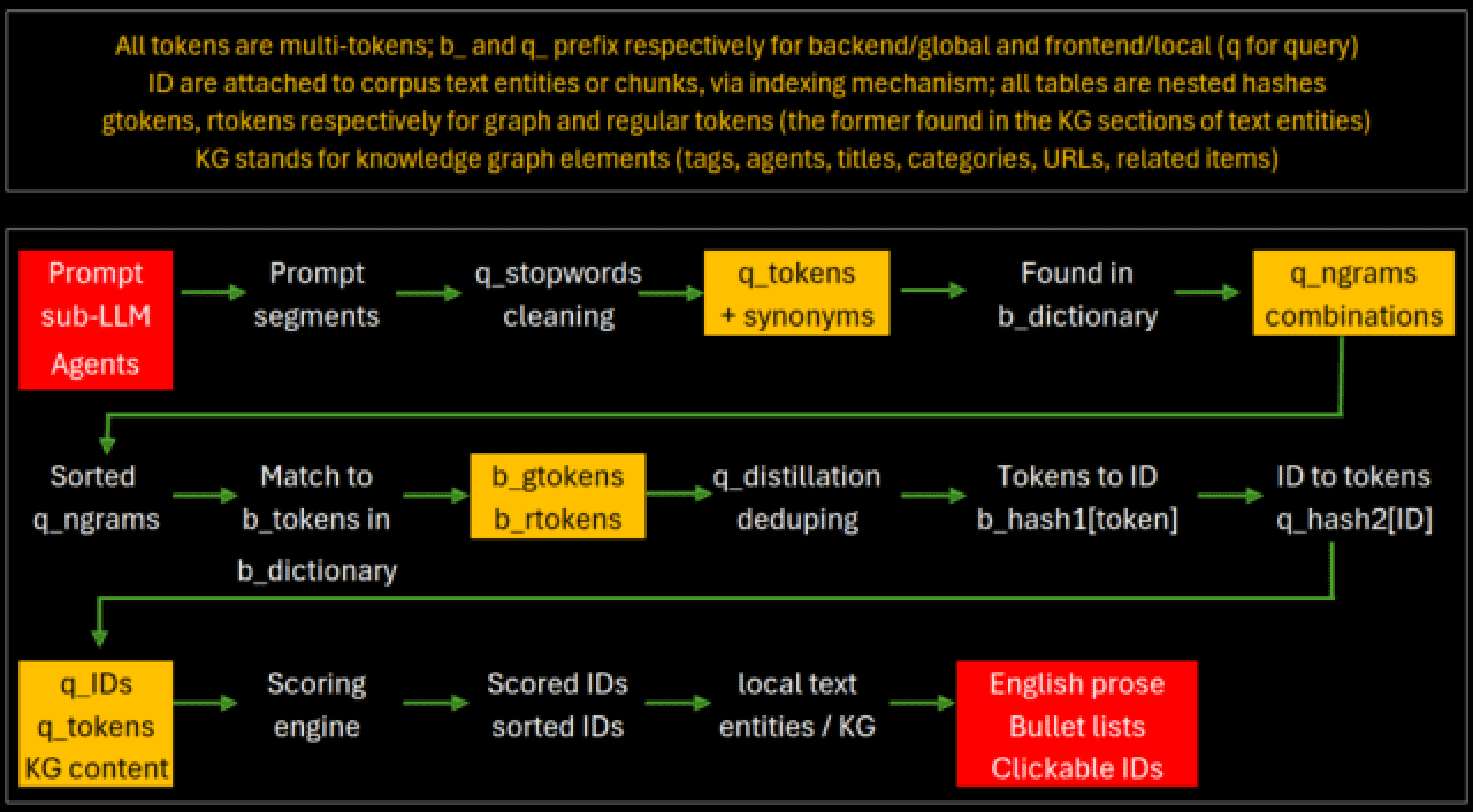
xLLM refers to a new generation of large language models that mark a significant departure from the traditional deep neural network (DNN)-based architectures, such as those used in GPT, Llama, Claude, and similar models. The concept is primarily driven by the need for more efficient, accurate, and explainable AI systems, especially for enterprise and professional use cases.
Key Innovations and Features
1. Architectural Shift
xLLM moves away from the heavy reliance on deep neural networks and GPU-intensive training. Instead, it leverages knowledge graphs (KG), advanced indexing, and contextual retrieval, resulting in a “zero-parameter” or “zero-weight” system in some implementations.
This approach enables the model to be hallucination-free and eliminates the need for prompt engineering, making it easier to use and more reliable for critical tasks.
2. Knowledge Graph Integration
xLLM natively integrates knowledge graphs into its backend, allowing for contextual chunking, variable-length embeddings, and more accurate keyword associations using metrics like pointwise mutual information (PMI).
This results in better handling of complex queries and retrieval of relevant information, even with few tokens.
3. Enhanced Relevancy and Exhaustivity
The model provides normalized relevancy scores for each answer, alerting users when the underlying corpus may have gaps. This transparency improves trust and usability for professional users1.
It also augments queries with synonyms and related terms to maximize exhaustivity and minimize information gaps.
4. Specialized Sub-LLMs and Real-Time Customization
xLLM supports specialized sub-models (sub-LLMs) that can be routed based on category, recency, or user-defined parameters. Users can fine-tune these parameters in real-time, even in bulk, without retraining the entire model.
This modularity allows for highly customizable and efficient workflows, especially in enterprise settings.
5. Deep Retrieval and Multi-Index Chunking
Advanced retrieval techniques like multi-indexing and deep contextual chunking are used, enabling secure, granular, and comprehensive access to structured and unstructured data (e.g., PDFs, databases).
The system can also connect to other LLMs or custom applications for tasks like clustering, cataloging, or predictions.
6. Agentic and Multimodal Capabilities
xLLM is designed to be agentic (capable of automating tasks) and multimodal, handling not only text but also images, video, and audio, and integrating with external APIs for specialized tasks (e.g., mathematical problem solving).
Comparison: LLMs vs. xLLM
Feature | LLMs (Traditional) | xLLM |
Core Architecture | Deep neural networks, transformers | Knowledge graph, contextual retrieval |
Training Requirements | Billions of parameters, GPU-intensive | Zero-parameter, no GPU needed |
Hallucination Risk | Present, often requires double-checking | Hallucination-free by design |
Prompt Engineering | Often necessary | Not required |
Customization | Limited, developer-centric | Real-time, user-friendly, bulk options |
Relevancy/Exhaustivity | No user-facing scores, verbose output | Normalized relevancy scores, concise |
Security/Data Leakage | Risk of data leakage | Highly secure, local processing possible |
Multimodal/Agentic | Limited, mostly text | Native multimodal, agentic automation |
Enterprise and Professional Impact
xLLM is particularly suited for enterprise environments due to:
Lower operational costs (no GPU, no retraining)
Higher accuracy and transparency
Better integration with business workflows (fine-tuning, automation)
Stronger security and explainability.
Summary
xLLM represents a paradigm shift in large language model design, focusing on efficiency, explainability, and enterprise-readiness by leveraging knowledge graphs, advanced retrieval, and modular architectures. It aims to overcome the limitations of traditional DNN-based LLMs, offering better ROI, security, and reliability for professional users.
xLLM refers to a new generation of large language models that mark a significant departure from the traditional deep neural network (DNN)-based architectures, such as those used in GPT, Llama, Claude, and similar models. The concept is primarily driven by the need for more efficient, accurate, and explainable AI systems, especially for enterprise and professional use cases.
Key Innovations and Features
1. Architectural Shift
xLLM moves away from the heavy reliance on deep neural networks and GPU-intensive training. Instead, it leverages knowledge graphs (KG), advanced indexing, and contextual retrieval, resulting in a “zero-parameter” or “zero-weight” system in some implementations.
This approach enables the model to be hallucination-free and eliminates the need for prompt engineering, making it easier to use and more reliable for critical tasks.
2. Knowledge Graph Integration
xLLM natively integrates knowledge graphs into its backend, allowing for contextual chunking, variable-length embeddings, and more accurate keyword associations using metrics like pointwise mutual information (PMI).
This results in better handling of complex queries and retrieval of relevant information, even with few tokens.
3. Enhanced Relevancy and Exhaustivity
The model provides normalized relevancy scores for each answer, alerting users when the underlying corpus may have gaps. This transparency improves trust and usability for professional users1.
It also augments queries with synonyms and related terms to maximize exhaustivity and minimize information gaps.
4. Specialized Sub-LLMs and Real-Time Customization
xLLM supports specialized sub-models (sub-LLMs) that can be routed based on category, recency, or user-defined parameters. Users can fine-tune these parameters in real-time, even in bulk, without retraining the entire model.
This modularity allows for highly customizable and efficient workflows, especially in enterprise settings.
5. Deep Retrieval and Multi-Index Chunking
Advanced retrieval techniques like multi-indexing and deep contextual chunking are used, enabling secure, granular, and comprehensive access to structured and unstructured data (e.g., PDFs, databases).
The system can also connect to other LLMs or custom applications for tasks like clustering, cataloging, or predictions.
6. Agentic and Multimodal Capabilities
xLLM is designed to be agentic (capable of automating tasks) and multimodal, handling not only text but also images, video, and audio, and integrating with external APIs for specialized tasks (e.g., mathematical problem solving).
Comparison: LLMs vs. xLLM
Feature | LLMs (Traditional) | xLLM |
Core Architecture | Deep neural networks, transformers | Knowledge graph, contextual retrieval |
Training Requirements | Billions of parameters, GPU-intensive | Zero-parameter, no GPU needed |
Hallucination Risk | Present, often requires double-checking | Hallucination-free by design |
Prompt Engineering | Often necessary | Not required |
Customization | Limited, developer-centric | Real-time, user-friendly, bulk options |
Relevancy/Exhaustivity | No user-facing scores, verbose output | Normalized relevancy scores, concise |
Security/Data Leakage | Risk of data leakage | Highly secure, local processing possible |
Multimodal/Agentic | Limited, mostly text | Native multimodal, agentic automation |
Enterprise and Professional Impact
xLLM is particularly suited for enterprise environments due to:
Lower operational costs (no GPU, no retraining)
Higher accuracy and transparency
Better integration with business workflows (fine-tuning, automation)
Stronger security and explainability.
Summary
xLLM represents a paradigm shift in large language model design, focusing on efficiency, explainability, and enterprise-readiness by leveraging knowledge graphs, advanced retrieval, and modular architectures. It aims to overcome the limitations of traditional DNN-based LLMs, offering better ROI, security, and reliability for professional users.
More enterprise AI insights
More enterprise AI insights
Stay informed. Leave your email to receive exclusive content and helpful resources.
Stay informed. Leave your email to receive exclusive content and helpful resources.
Recent Articles
Recent Articles

Enterprise AI Costs: Why Companies Are Paying Twice
Enterprise AI Costs: Why Companies Are Paying Twice
Enterprise AI Costs: Why Companies Are Paying Twice

Numbers Every CISO Should Know Before the Next AI Deployment
Numbers Every CISO Should Know Before the Next AI Deployment
Numbers Every CISO Should Know Before the Next AI Deployment

AI Myths Enterprise Leaders Still Believe
AI Myths Enterprise Leaders Still Believe
AI Myths Enterprise Leaders Still Believe

Numbers Every CRO Should Know
Numbers Every CRO Should Know
Numbers Every CRO Should Know

Why Generic AI Tools Don't Understand Your Business
Why Generic AI Tools Don't Understand Your Business
Why Generic AI Tools Don't Understand Your Business

Operational Numbers Every COO Should Know
Operational Numbers Every COO Should Know
Operational Numbers Every COO Should Know

The AI Operating System for Enterprises
300 Davis St, McKinney, TX 75069 - U.S.
© 2026 Copyright - bondingAI.
The AI Operating System for Enterprises
300 Davis St, McKinney, TX 75069 - U.S.
© 2026 Copyright - bondingAI.
The AI Operating System for Enterprises
300 Davis St, McKinney, TX 75069 - U.S.
© 2026 Copyright - bondingAI.
The AI Operating System for Enterprises
300 Davis St, McKinney, TX 75069 - U.S.
© 2026 Copyright - bondingAI.