
AI Token Costs: Context Windows, Pricing and Audit Trails
AI Token Costs: Context Windows, Pricing and Audit Trails

Context Isn't Infinite: How Much of Your AI Budget Disappears Into Wasted Tokens
Most AI invoices break usage into input tokens, output tokens and a total. That is enough to pay the bill, but not enough to explain it. Finance teams want to know which team or process generated the spend. Compliance teams want to know what the model was given when it produced a particular answer. Both questions depend on the same record, and most deployments do not keep one. This article covers where AI token costs come from, why larger context windows do not solve the problem, and what an explainable AI audit trail needs to capture so that cost can be traced as well as measured.
This article describes how token pricing works in general terms. Rates, discounts and limits differ by provider and change often, so check each provider's current price list before budgeting.
What you are billed for
Providers price input and output tokens separately, and output tokens cost more than input tokens. Anthropic's pricing documentation shows this pattern across its current model lineup, with larger models carrying higher rates than smaller ones. Other providers use different rates and structures.
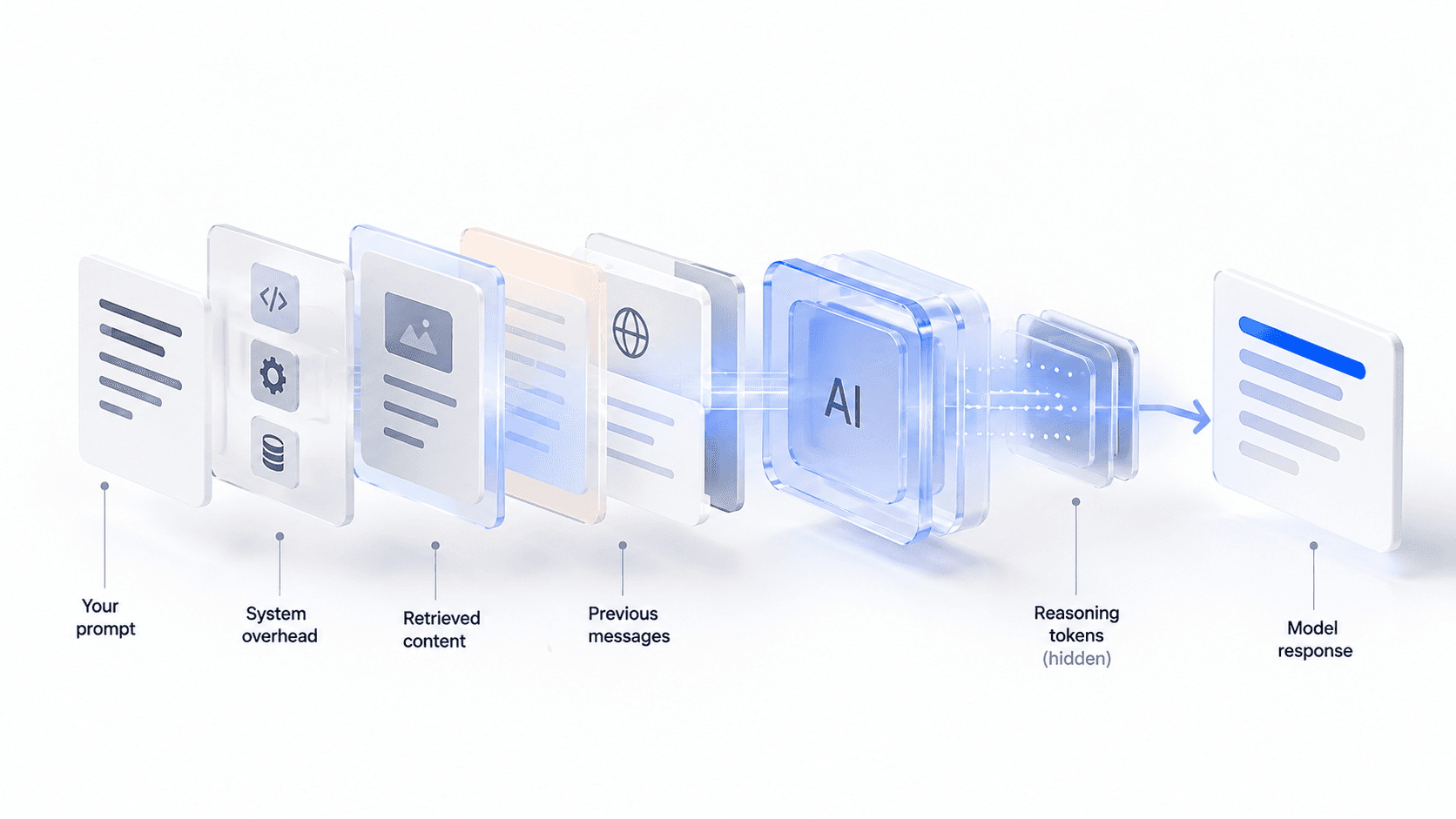
Several cost items never appear in the text of a request or a response:
Reasoning tokens. OpenAI's reasoning guide states that reasoning tokens are not visible through the API, still occupy space in the context window, and are billed as output tokens. The count appears in the response's usage data. The reasoning itself does not.
Tool and system overhead. A request that declares tools carries their definitions every time. Anthropic's pricing documentation lists the extra input tokens that tool definitions and tool-use system prompts add, and shows that the computer-use and browser toolsets add a sizeable block of input before any user content is included.
Accumulated context. Anthropic's documentation notes that web search results retrieved during a conversation count as input tokens, including in later turns of that conversation.
Tokenizer changes. Anthropic states that its newer models use an updated tokenizer that produces more tokens for the same text, with the increase depending on the content. Comparing per-token prices across model versions can therefore understate the difference in cost.
Larger context windows: more capacity, not more value
Context windows have grown large enough that a single request can carry very long documents or entire conversation histories. How that is billed varies. On Anthropic's pricing page, most current models charge the standard per-token rate across the full window, while its smallest model charges a higher rate once a prompt passes a stated length. Structures like this differ by model and provider, so it is worth knowing where the thresholds are before they show up on an invoice.
Documents account for much of the volume. Anthropic's pricing documentation gives approximate token sizes for typical content, and the gap between an average web page and a full research paper is large. A document of that size attached to every request is paid for on every call. The same documentation describes cached input as read at a fraction of the normal input rate, so a document that is identical on every request is a first candidate for caching, and a document that varies by request is a candidate for sending only the relevant passages.
Paying to include more text also does not guarantee the model uses it. In a study published in TACL in 2024, Liu and colleagues found that performance was often highest when the relevant information sat at the beginning or end of the input, and dropped significantly when it sat in the middle, including for models built for long contexts. The models in that study are older than today's, so the size of the effect may differ now. The finding still separates two things buyers often treat as one: how much a model can accept, and how well it uses what it accepts.
Why this is an audit problem
AI spend has moved into finance's scope quickly. According to the FinOps Foundation's State of FinOps 2026 survey, nearly all respondents now manage AI spend, up sharply from two years earlier. Summaries of the report list visibility, allocation to business units and return on investment as the main challenges of applying FinOps to AI.
Those three challenges are record-keeping problems. A token count says how much was used. It does not say which documents were in the context, which model and tokenizer version processed them, which business unit made the request, or whether anyone used the answer. Reasoning tokens widen the gap, because the billed quantity is known and the content is not.
There is an explainability side to this as well. If the context assembled for an answer is not recorded, a reviewer cannot reconstruct what the model was given, and that is the same gap that limits explainable AI. Cost and explainability depend on the same missing record.
What a cost-auditable AI trail records
These are our working criteria, not a regulatory standard. For each request, the record should include:
Who and why: the user or service, the business unit and the use case.
Model and version, including the tokenizer version, because token counts depend on it.
Token counts by type: input, cached input, output and reasoning.
Context sources: which documents or passages entered the context, and why they were selected.
Controls in effect: output and reasoning limits, caching, routing rules, and whether the request ran in real time or in batch.
Outcome: whether the response was used, edited or rejected, so cost can be compared with value.
Reducing waste without losing traceability
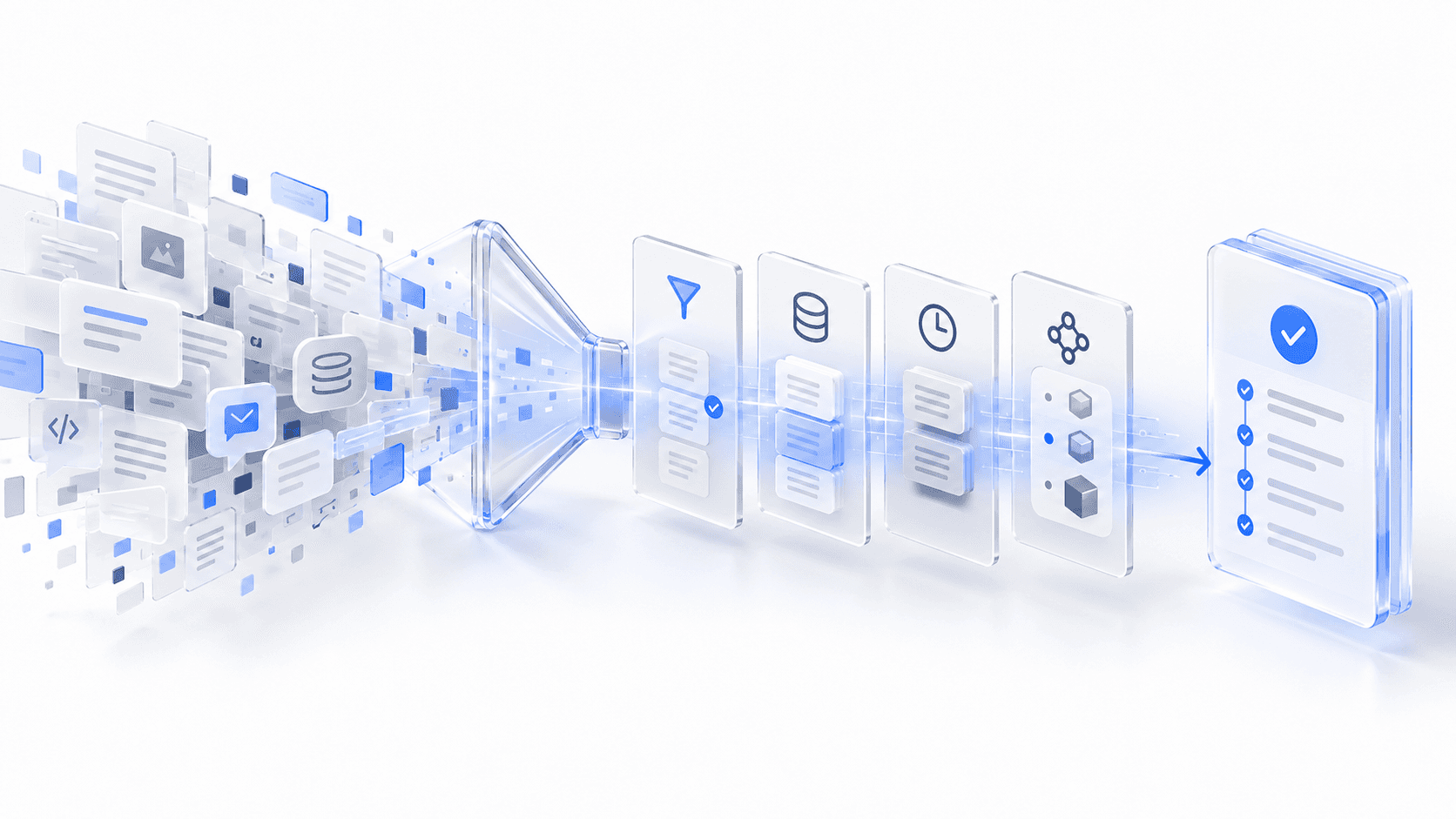
Send relevant passages instead of whole documents. A smaller context costs less and makes it easier to show what the model saw.
Cache stable content, such as policies and system prompts. Anthropic's documentation describes cache reads as priced at a fraction of normal input, with a small premium to write to the cache. The exact fraction varies by model.
Use batch processing for work that is not time sensitive. Anthropic's pricing documentation lists a discount for batch requests on both input and output.
Match model size to the task. Anthropic's own guidance suggests its smallest model for simple tasks, a mid-size model for most production work and its largest for the most complex reasoning.
Set output and reasoning limits deliberately. OpenAI's documentation warns that a limit reached during reasoning can mean paying for input and reasoning without receiving a visible answer, and it recommends leaving generous room for reasoning and output when starting out.
Each of these changes should be logged, so that a drop in spend can be tied to a decision and a change in answer quality can be tied to the same decision.
How bondingAI approaches it
bondingAI built its platform on the premise that enterprise AI should be governed and explainable by design.
AIOS, bondingAI's AI Operating System, runs AI queries, analysis and actions under the organization's own rules, with explainability and monitoring in the same layer. That gives each interaction an owner, a defined data scope and a record, which is what cost allocation and audit both require.
xLLM, bondingAI's proprietary language model, is deterministic, explainable and owned by the enterprise, so the organization controls how the model is used and holds the data that describes that use.
For a CFO, this makes AI spend attributable to a process and an outcome. For a CTO, it removes the need to assemble the same visibility from billing exports, application logs and vendor dashboards.
If your AI spend is growing faster than your ability to explain it, start with the audit trail.
Speak with a bondingAI specialist!
Context Isn't Infinite: How Much of Your AI Budget Disappears Into Wasted Tokens
Most AI invoices break usage into input tokens, output tokens and a total. That is enough to pay the bill, but not enough to explain it. Finance teams want to know which team or process generated the spend. Compliance teams want to know what the model was given when it produced a particular answer. Both questions depend on the same record, and most deployments do not keep one. This article covers where AI token costs come from, why larger context windows do not solve the problem, and what an explainable AI audit trail needs to capture so that cost can be traced as well as measured.
This article describes how token pricing works in general terms. Rates, discounts and limits differ by provider and change often, so check each provider's current price list before budgeting.
What you are billed for
Providers price input and output tokens separately, and output tokens cost more than input tokens. Anthropic's pricing documentation shows this pattern across its current model lineup, with larger models carrying higher rates than smaller ones. Other providers use different rates and structures.
Several cost items never appear in the text of a request or a response:
Reasoning tokens. OpenAI's reasoning guide states that reasoning tokens are not visible through the API, still occupy space in the context window, and are billed as output tokens. The count appears in the response's usage data. The reasoning itself does not.
Tool and system overhead. A request that declares tools carries their definitions every time. Anthropic's pricing documentation lists the extra input tokens that tool definitions and tool-use system prompts add, and shows that the computer-use and browser toolsets add a sizeable block of input before any user content is included.
Accumulated context. Anthropic's documentation notes that web search results retrieved during a conversation count as input tokens, including in later turns of that conversation.
Tokenizer changes. Anthropic states that its newer models use an updated tokenizer that produces more tokens for the same text, with the increase depending on the content. Comparing per-token prices across model versions can therefore understate the difference in cost.
Larger context windows: more capacity, not more value
Context windows have grown large enough that a single request can carry very long documents or entire conversation histories. How that is billed varies. On Anthropic's pricing page, most current models charge the standard per-token rate across the full window, while its smallest model charges a higher rate once a prompt passes a stated length. Structures like this differ by model and provider, so it is worth knowing where the thresholds are before they show up on an invoice.
Documents account for much of the volume. Anthropic's pricing documentation gives approximate token sizes for typical content, and the gap between an average web page and a full research paper is large. A document of that size attached to every request is paid for on every call. The same documentation describes cached input as read at a fraction of the normal input rate, so a document that is identical on every request is a first candidate for caching, and a document that varies by request is a candidate for sending only the relevant passages.
Paying to include more text also does not guarantee the model uses it. In a study published in TACL in 2024, Liu and colleagues found that performance was often highest when the relevant information sat at the beginning or end of the input, and dropped significantly when it sat in the middle, including for models built for long contexts. The models in that study are older than today's, so the size of the effect may differ now. The finding still separates two things buyers often treat as one: how much a model can accept, and how well it uses what it accepts.
Why this is an audit problem
AI spend has moved into finance's scope quickly. According to the FinOps Foundation's State of FinOps 2026 survey, nearly all respondents now manage AI spend, up sharply from two years earlier. Summaries of the report list visibility, allocation to business units and return on investment as the main challenges of applying FinOps to AI.
Those three challenges are record-keeping problems. A token count says how much was used. It does not say which documents were in the context, which model and tokenizer version processed them, which business unit made the request, or whether anyone used the answer. Reasoning tokens widen the gap, because the billed quantity is known and the content is not.
There is an explainability side to this as well. If the context assembled for an answer is not recorded, a reviewer cannot reconstruct what the model was given, and that is the same gap that limits explainable AI. Cost and explainability depend on the same missing record.
What a cost-auditable AI trail records
These are our working criteria, not a regulatory standard. For each request, the record should include:
Who and why: the user or service, the business unit and the use case.
Model and version, including the tokenizer version, because token counts depend on it.
Token counts by type: input, cached input, output and reasoning.
Context sources: which documents or passages entered the context, and why they were selected.
Controls in effect: output and reasoning limits, caching, routing rules, and whether the request ran in real time or in batch.
Outcome: whether the response was used, edited or rejected, so cost can be compared with value.
Reducing waste without losing traceability
Send relevant passages instead of whole documents. A smaller context costs less and makes it easier to show what the model saw.
Cache stable content, such as policies and system prompts. Anthropic's documentation describes cache reads as priced at a fraction of normal input, with a small premium to write to the cache. The exact fraction varies by model.
Use batch processing for work that is not time sensitive. Anthropic's pricing documentation lists a discount for batch requests on both input and output.
Match model size to the task. Anthropic's own guidance suggests its smallest model for simple tasks, a mid-size model for most production work and its largest for the most complex reasoning.
Set output and reasoning limits deliberately. OpenAI's documentation warns that a limit reached during reasoning can mean paying for input and reasoning without receiving a visible answer, and it recommends leaving generous room for reasoning and output when starting out.
Each of these changes should be logged, so that a drop in spend can be tied to a decision and a change in answer quality can be tied to the same decision.
How bondingAI approaches it
bondingAI built its platform on the premise that enterprise AI should be governed and explainable by design.
AIOS, bondingAI's AI Operating System, runs AI queries, analysis and actions under the organization's own rules, with explainability and monitoring in the same layer. That gives each interaction an owner, a defined data scope and a record, which is what cost allocation and audit both require.
xLLM, bondingAI's proprietary language model, is deterministic, explainable and owned by the enterprise, so the organization controls how the model is used and holds the data that describes that use.
For a CFO, this makes AI spend attributable to a process and an outcome. For a CTO, it removes the need to assemble the same visibility from billing exports, application logs and vendor dashboards.
If your AI spend is growing faster than your ability to explain it, start with the audit trail.
Speak with a bondingAI specialist!
More enterprise AI insights
More enterprise AI insights
Stay informed. Leave your email to receive exclusive content and helpful resources.
Stay informed. Leave your email to receive exclusive content and helpful resources.
Recent Articles
Recent Articles

LLM Explainability: How Tokenization Limits AI Traceability
LLM Explainability: How Tokenization Limits AI Traceability
LLM Explainability: How Tokenization Limits AI Traceability

AI Sprawl: Why Most Companies Can't See What Their AI Does
AI Sprawl: Why Most Companies Can't See What Their AI Does
AI Sprawl: Why Most Companies Can't See What Their AI Does

Enterprise AI Costs: Why Companies Are Paying Twice
Enterprise AI Costs: Why Companies Are Paying Twice
Enterprise AI Costs: Why Companies Are Paying Twice

Numbers Every CISO Should Know Before the Next AI Deployment
Numbers Every CISO Should Know Before the Next AI Deployment
Numbers Every CISO Should Know Before the Next AI Deployment

AI Myths Enterprise Leaders Still Believe
AI Myths Enterprise Leaders Still Believe
AI Myths Enterprise Leaders Still Believe

Numbers Every CRO Should Know
Numbers Every CRO Should Know
Numbers Every CRO Should Know

The AI Operating System for Enterprises
300 Davis St, McKinney, TX 75069 - U.S.
© 2026 Copyright - bondingAI.
The AI Operating System for Enterprises
300 Davis St, McKinney, TX 75069 - U.S.
© 2026 Copyright - bondingAI.
The AI Operating System for Enterprises
300 Davis St, McKinney, TX 75069 - U.S.
© 2026 Copyright - bondingAI.
The AI Operating System for Enterprises
300 Davis St, McKinney, TX 75069 - U.S.
© 2026 Copyright - bondingAI.